


As disabled Americans continue the fight for justice, equality, and protection from discrimination, the message is clear: Disability rights are civil rights. The passage of the Americans with Disabilities Act was a landmark victory, one of the most significant civil rights laws in our history, paving a path toward greater accessibility and acceptance. While the ADA was transformative, the work remains unfinished. We are more determined than ever to keep fighting until we achieve a world that is fully inclusive and accessible for everyone.
For three decades, Democrats have been steadfast in building a nation where every American can thrive. Today, that commitment is more critical than ever, as the Trump Administration and Republicans threaten the very programs — Medicaid, Medicare, and Social Security — that Americans with disabilities rely on every day.
This Disability Pride Month, we celebrate the ADA’s legacy while acknowledging that our work is far from over. People like Leslie fuel our fight for a nation that truly embraces, uplifts, and invests in every American. Read on for her story.
Q: Tell us about your background and what led you to your current involvement.
In my almost 30 years, I’ve learned that disabled people like me are too often treated as talking points and photo ops rather than leaders, decision-makers, and candidates. I’ve spent my life challenging that.
A few years ago, I spent three months mostly in bed. Luckily for me, I had Medicaid, so I could focus on getting better instead of on how I’d pay for it. Without it, I don’t know what I would have done, yet that same coverage that made my recovery possible had been designed, debated, and voted on almost entirely by people who had never needed it. That’s the pattern I see everywhere: the policies that shape disabled people’s lives get written in rooms we’re rarely invited into.
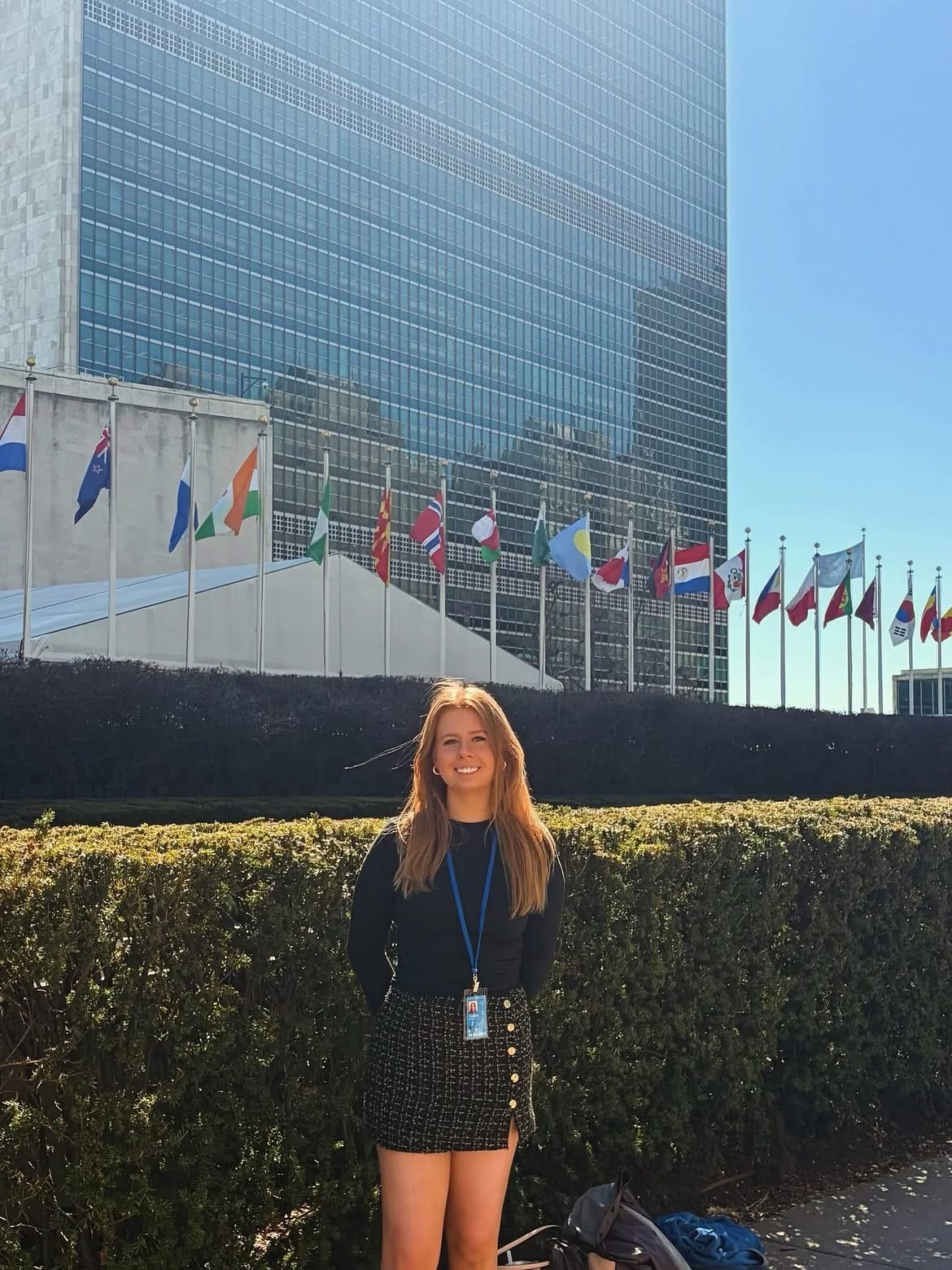
Like so many disabled people, I’m constantly told what I am and what I need, but rarely asked. So I set out to change who’s in the room. Today, I’m Chair of the Young Democrats of America Disability Caucus, campaign manager for disabled congressional candidate Dr. Mariah Lancaster, and Youth President of the International Network of Liberal Women. I’m working to change our community from a talking point to the people leading the change and making the decisions. Nothing about us without us.
Q: What is commonly misunderstood about disability rights or accessibility? Does this change for invisible disabilities?
The biggest misconception? We passed the ADA, put in a few ramps, and accessibility got solved.
Unfortunately, that isn’t the case. It isn’t as simple as installing a ramp for things to be accessible. Accessibility is a practice. Needs can differ, sometimes conflict, and can change over time. Real accessibility isn’t about guessing what people need and building it once; it’s about asking and working with our community to improve and change. A space isn’t accessible because it meets a code written decades ago; it’s accessible because the people in it can actually be there, fully, without having to fight to be there.
Accessibility gets even more complicated with invisible disabilities. When you can’t see someone’s disability, access also becomes about belief. People with non-apparent disabilities are made to prove they’re disabled enough to deserve an accommodation and not just that they are ‘gaming the system.’ This is even more true for disabled people who are also marginalized by race or gender, whose needs get second-guessed the most.
Accessibility helps everyone, so why do we keep fighting it? During the pandemic, remote work kept the economy afloat, the exact flexibility disabled people had been requesting for decades, long before Zoom, and were told was impossible. That’s the curb cut effect: access built for disabled people ends up serving everyone. Disability is the one group any of us can join at any moment, no warning and no choosing. Accessibility isn’t a favor you do for someone else; it’s something you may have to fight for yourself in the future.
Q: What barriers do voters with disabilities face, and how can voting become truly accessible?
When you go to the polls, you park, get out of the car, walk in, look at your ballot, fill it out, and hand it back. Simple, unless any one of those steps is something you can’t do. What if there’s no accessible parking? No ramp? What about a voter who is blind or who can’t grip a pen and can’t mark a paper ballot alone? They may have to rely on someone else to help cast their vote, giving up the privacy every other voter takes for granted. Accessible machines are required by law, but they’re routinely broken, unplugged, or run by staff who were never trained on them. “Accessible in theory” isn’t accessible.
On top of that, some of us don’t get a ballot at all. In many states, being placed under guardianship or conservatorship can strip your right to vote, sometimes automatically or at a single judge’s discretion. Things like Photo ID laws can hinder a disabled person’s ability to vote. When you can’t drive, getting an ID becomes its own obstacle course, so “just show your ID” isn’t as simple.
So how do we fix it? We need to train poll workers and make sure the accessible machines actually work, with someone knowing how to run them. We need to expand mail-in voting, early voting, and accessible ballot return. We need to audit polling places and make accessibility front of mind when picking locations, not just as an afterthought. We need to push back against things that disenfranchise voters, like voter ID laws.
When disabled people make up 20-25% of the population, our votes can be a powerful voting bloc. We just need the system to invest in us so we can show up.
Q: Beyond policy, what cultural shifts and daily actions make someone a better ally?
I have a few simple things you can do:
Disability isn’t a dirty word, so stop reaching for weird euphemisms to avoid it. “Differently abled,” “special needs,” “handicapable,” those exist to manage other people’s discomfort, not to serve us. Disabled is the word that carries our rights, our history, and our power. Every time someone uses a euphemism to ‘soften’ it, they are chipping away at our rights.
There’s no such thing as disabled enough. Allergies, anxiety, a substance use disorder, and mobility issues are all disabilities. Disability is vast, and it doesn’t come with a threshold you have to clear before you’re allowed to claim it. Don’t be afraid to identify as disabled. We are one disability community, and we can be a powerful movement when we all work together.
Talk to us, not the companion, interpreter, or aide beside us. Look us in the eyes and allow us to make our own decisions; don’t assume we can’t.
Pay us for our labor. Our expertise and our emotional labor aren’t free.
These are really easy ways to make a huge difference for the disability community in the party and beyond. Thank you for your time and happy Disability Pride Month!
Your Voice is Essential
Your lived experience is vital to this movement. By sharing your story, you help shape the national narrative and drive policies that center disability justice and accessibility. Join the DNC Storytellers Network today to ensure our community’s experiences lead the way toward a more equitable future.
Share, Subscribe, and Support Ground Game
Thank you so much for reading The Blue Print! If you enjoyed this week’s newsletter, let us know with a like, restack, and make sure to share it with your friends so we can keep bringing you weekly updates from the DNC’s Grassroots Team!
Thanks for fighting with us! Together, we can make a difference.
In solidarity,
Jenny
**DISCLAIMER: This article may contain outdated information or links to opportunities and other events that may have already passed. Please continue to stay updated with The Blue Print’s most recent posts for the most up-to-date information.**