


Earlier this year, the DNC’s Organizing Team launched the initial pilot program for When We Count, the DNC’s largest-ever voter registration effort. Through this paid, part-time fellowship, young people are trained to register new Democratic voters in their own communities and close critical registration gaps in battleground states ahead of the 2026 midterms.
Registering new Democrats couldn’t be more urgent: In recent years, Democrats have lost major ground to Republicans, particularly among young people and voters of color. Meanwhile, far-right groups like TurningPoint USA have invested millions in partisan voter registration efforts.
When We Count is the DNC’s response: Democrats’ largest-ever on-the-ground program that focuses partisan voter registration efforts where the opportunity to grow the electorate is greatest. The program meets young voters where they live, work, and gather, not just on college campuses.
The fellowship is open to college and non-college applicants ages 18–29, does not require prior political experience, and is designed for individuals who can commit to a paid, part-time voter registration program in priority communities.
This week, we are spotlighting Lani, a When We Count fellow based in Arizona who shares her on-the-ground experiences and how she’s gearing up to mobilize young voters in the final stretch.
Q: Tell us about your background. What motivated you to pursue a path in politics and organizing?
When I was 17 years old, I attended Arizona Girls State, a week-long summer camp for young women entering their senior year of high school. There, more than 300 rising seniors built a mock State of Arizona, from local city councils to the Governor’s Office. For one week, we created a government designed by women, for women. It was a utopia.
When I left Girls State, the reality of women’s representation in government began to set in: women hold only about 30% of elected offices worldwide. That disparity, and my belief in the power of women in leadership, have continued to shape my path in public service. It led me to work for the Vote for Equality campaign in 2024, supporting pro-choice candidates up and down the ballot; to serve in the office of Congresswoman Yassamin Ansari, the youngest woman currently in Congress; and now to work with the DNC’s When We Count Fellowship, mobilizing young Arizonans to vote and helping build a political future where women have a seat at every table.
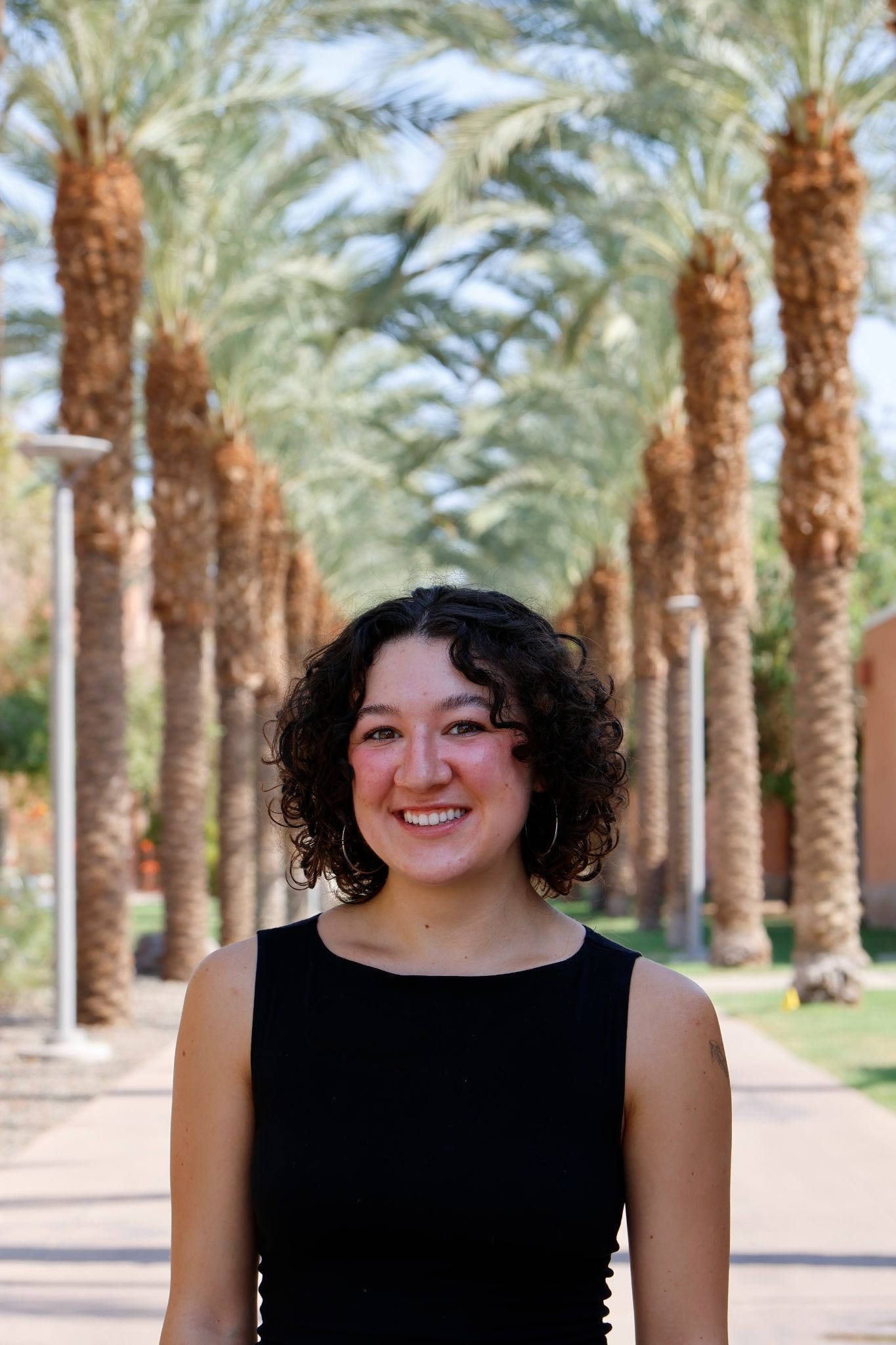
Headshot of Lani going into her senior year at Arizona State University.
Q: The When We Count Fellowship aims to register new Democratic voters and engage the next generation of Democrats. Why did you decide to apply for the fellowship, and what have you accomplished so far in this position?
I recently studied abroad in Madrid, Spain, from January through May 2026, where I studied politics and feminism through a non-American lens. While I was in Europe, the political landscape in the United States was changing rapidly under the Trump administration. The constant stream of news coming from home left me feeling guilty about being temporarily removed from political advocacy in the United States, even if that distance lasted only five months. So, when I saw the When We Count Fellowship application on Arizona State University’s job board, I knew that returning to civic engagement through voter registration and conversations with Arizona voters about the upcoming 2026 midterm elections would be the perfect way to reconnect with my community, my state, and my country.
One of the most important skills I have developed as a When We Count Fellow is how to conduct partisan voter registration. The work is not easy; it challenges nearly every social norm we are taught to follow: talking to strangers, talking about politics, and, perhaps most intimidatingly, talking to strangers about politics. But regardless of the outcome of a conversation, I try to leave each interaction on a positive note. As Fellows, our goal is not simply to register voters; it is also to remind people that their participation in our democracy matters and that they have the power to shape the communities they live in.
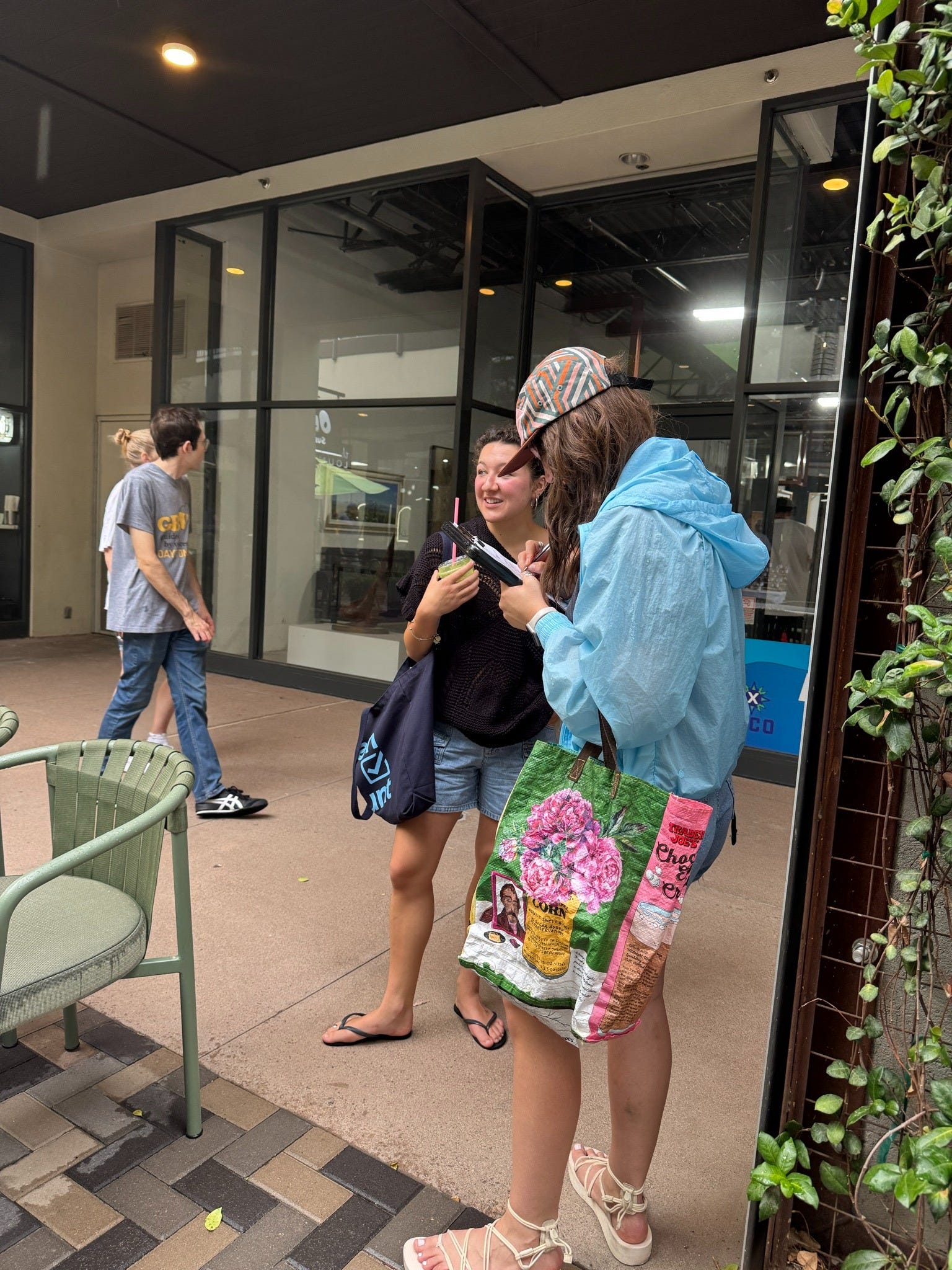
Lani registering someone who just moved to Arizona to vote at the Downtown Phoenix Farmer’s Market.
Q: You are not only registering voters, but building a connection with them to ensure they cast their ballot on election day. What does the process of registering voters look like in this fellowship?
I typically begin a shift of “high-traffic canvassing” (HTC) by being sent to a third space somewhere in the greater Phoenix area. As When We Count Fellows, we specifically target spaces where young people naturally gather, including malls, concerts, festivals, and community meetings. Working in pairs or small groups, Fellows approach potential voters with a positive attitude and confidence.
I always introduce myself by name and ask for the potential voter’s name as well. This simple exchange helps turn what could otherwise feel like a transactional interaction into a genuine conversation. I’ve also found that eye contact and a handshake can go a long way toward establishing trust with potential voters.
When you approach someone with respect, patience, and genuine eye contact, they are much more likely to feel comfortable engaging with you and asking questions about the voting process.
For follow-up, I also provide voters with resources that can help them navigate their first or early experiences at the ballot box. Depending on their needs, I share voting guides and advocacy resources, including organizations such as Arizona List or EMILY’s List, so that new voters have additional information available when making their own decisions.
Q: The When We Count Fellowship is reaching the next generation of Democrats and meeting young voters where they are. Why is it important that we’re changing the way we’re reaching young voters?
Traditionally, voter registration efforts have concentrated heavily on college campuses, which can unintentionally exclude young people who are in the workforce, attending trade school, serving in the military, or otherwise outside of traditional four-year college environments from conversations about civic engagement. As I mentioned earlier, When We Count is helping change that model by meeting young voters in the “third spaces” where they already spend their time and where community-building naturally takes place. Some of my most successful voter registration shifts have been at World Cup watch parties, LGBTQIA+-owned coffee shops, and indoor malls. Approaching people during their free time, particularly in spaces where they already feel comfortable, often creates a more natural and receptive conversation about voting.
The fellowship also incorporates a significant digital component, particularly through relational voter registration. For me, that means going through my phone contacts one by one and making sure my friends, coworkers, classmates, and acquaintances are registered to vote at their current addresses and have access to the information they need to participate in the upcoming election.
The When We Count Fellowship is just one example of how the Democratic Party is creating opportunities for young people to become more directly involved in politics. Personally, I am a Democrat in large part because of the diversity of the party and its emphasis on protecting the many different communities that make up the United States. As a member of the LGBTQIA+ community, I am proud to be part of a political movement that advocates for my right to live openly and authentically. Being able to share that personal connection with potential voters has made many of my conversations especially meaningful. I am not simply asking people to participate in politics; I am sharing why political participation matters to me and why I believe our democracy is strongest when everyone has the opportunity to be represented.
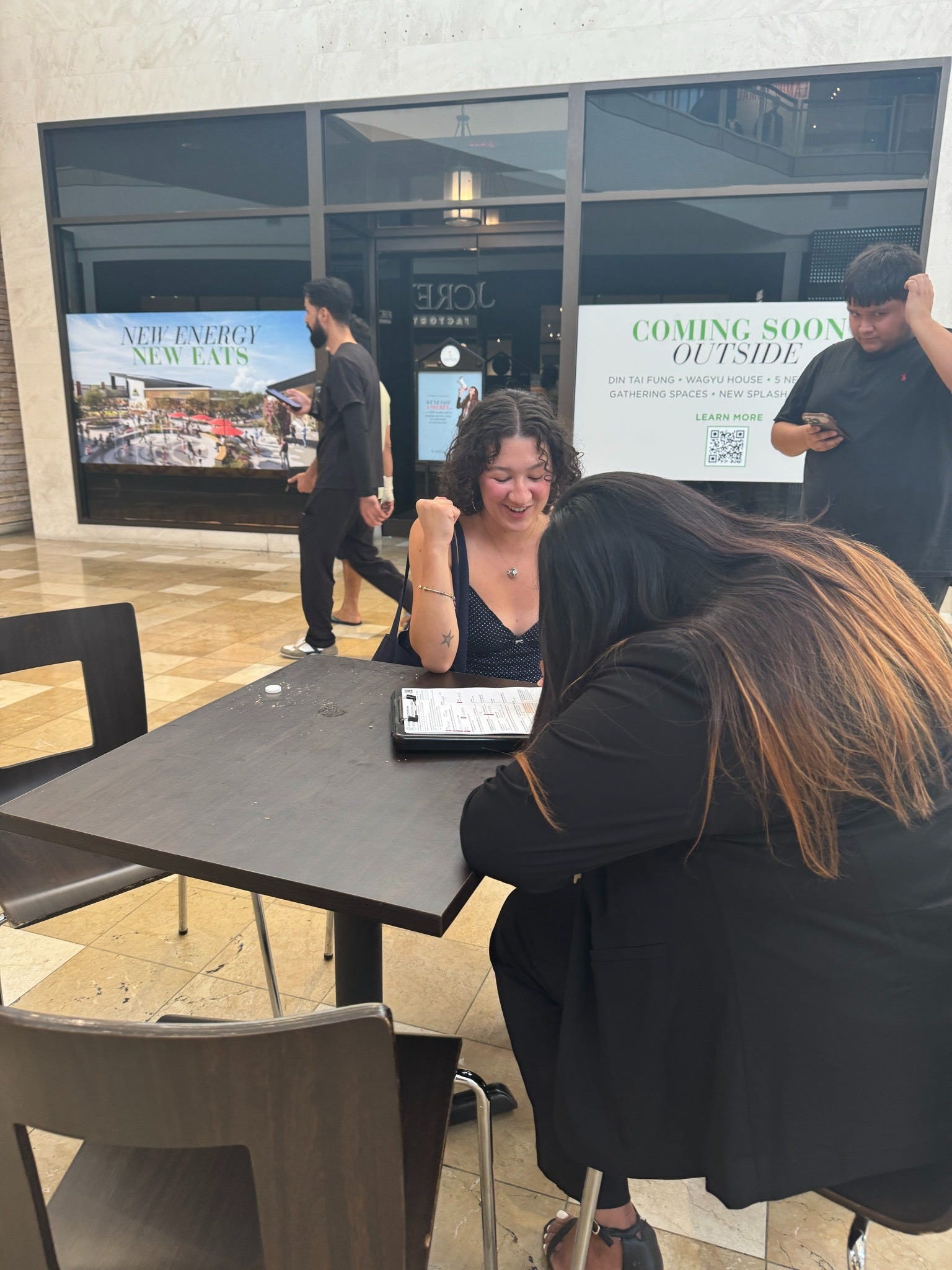
Lani registering a first-time voter at a local mall.
Q: When We Count is a partisan voter registration program. Why is it so important to register new Democratic voters as opposed to traditional voter registration?
Here in Arizona, a critical battleground state, we have a history of super-tight-margin elections. For example, in 2022, our Democratic Attorney General, Kris Mayes, won in the general election by 280 votes. This year in 2026, Attorney General Mayes is back on the ballot, this time running against an election-denying MAGA Republican, making registering new voters as “Democrats” that much more important.
Contrary to popular belief, Arizona does not have an “Independent Party.” Instead, a large share of Arizona voters are registered with no party preference, often referred to as “independent” voters. Because Arizona has a semi-closed primary system, voters who are not affiliated with a recognized political party face different rules for participating in partisan primary elections. One of the goals of the When We Count Fellowship is to encourage unaffiliated Arizona voters who identify with Democratic values to register as Democrats, giving them the opportunity to participate directly in the Democratic primary and have a voice in shaping the candidates and priorities of the party.
When I speak with Arizonans who are uncertain about which party, if any, they want to affiliate with, I often begin with a simple question: “How do you feel about Donald Trump?”, with most answers stemming from a deep distaste. We are building a party of independent, moderate, and progressive voices all united in stopping Trump’s and his enablers’ corruption.
One of the most memorable conversations I have had during the fellowship was with a 2024 Trump voter I met at a mall. He told me that shortly after the 2024 election, his father was deported, an experience that fundamentally changed the way he viewed the Republican Party and its immigration policies. I shared some of my own experiences working on immigration cases in Congressman Ansari’s office here in Arizona, and we had a thoughtful conversation about immigration, political identity, and the issues that shape how people vote. By the end of our conversation, he was checking the “Democrat” box on the Arizona voter registration form.
That interaction reminded me why I find voter registration work so meaningful. Political identity is not always fixed, and people’s experiences can fundamentally reshape how they understand their communities and their place within the political system.
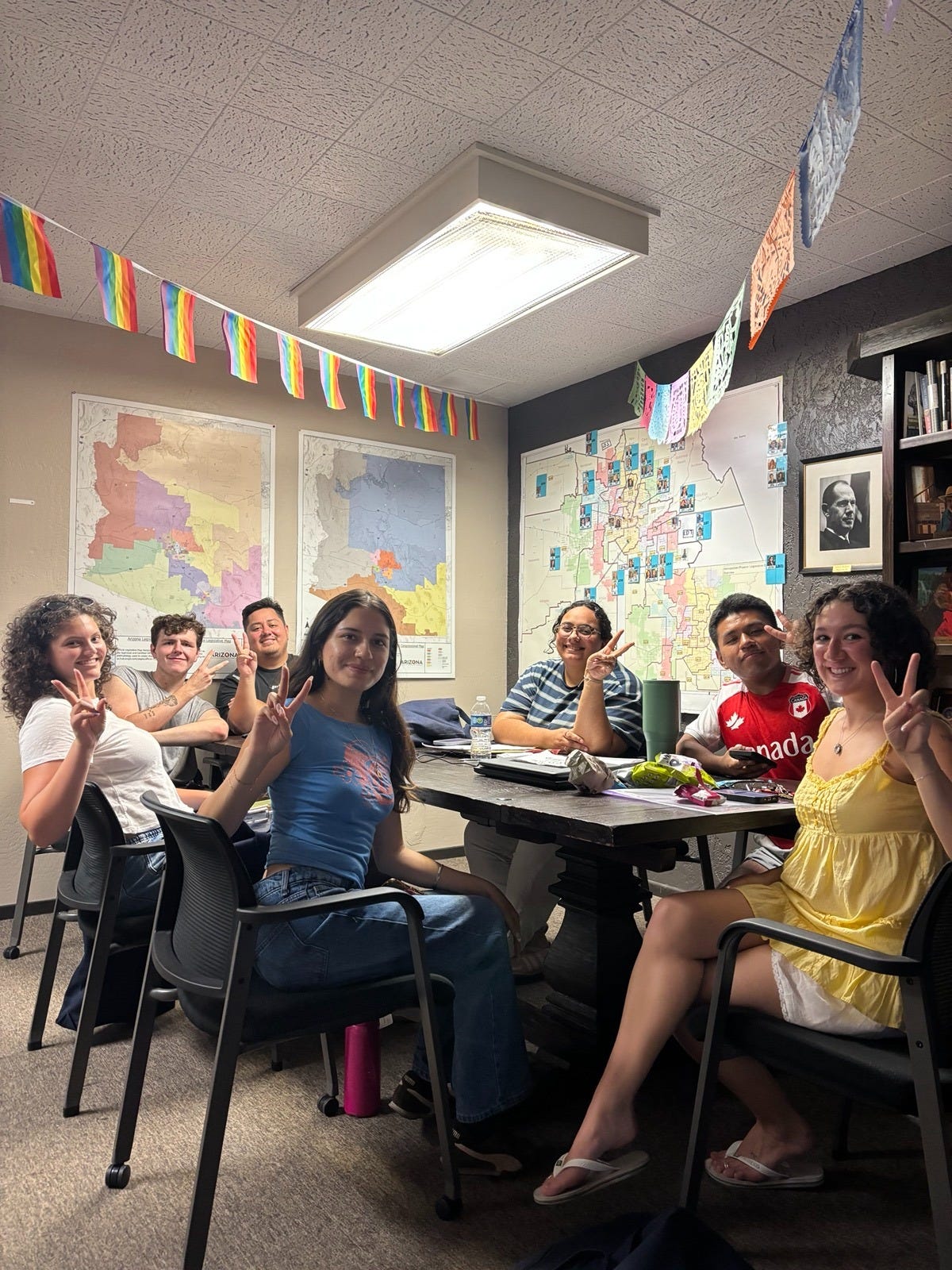
Lani and a group of other When We Count Fellows doing a post “HTC” shift debrief at the Arizona Democratic Party Office.
Q: Share your goals for the rest of the program. What do you hope to accomplish leading up to the midterm elections in November?
With school starting again this month, I am looking forward to returning to high school and college campuses for voter registration while continuing to engage young people in the “third spaces” where they spend their time. As I did in 2024, I am also working to present to my own sorority and other Greek organizations on campus about civic engagement and what is at stake in the 2026 election. I am excited to bring the lessons I have learned through When We Count back to my own campus community and encourage more young people to see themselves as active participants in our democracy.
I am incredibly thankful to be part of the ever-evolving Democratic movement here in Arizona. When We Count has made me a stronger leader, more confident organizer, and even more passionate advocate for the values that guide my political work. Most importantly, this fellowship has reminded me that meaningful political change begins with conversations between people in our own communities.
I am also deeply grateful to everyone who donated to the Democratic Party and supported this work. Those contributions have a tangible impact on the ground: they help put water, cooling supplies, and other heat-mitigation resources in the hands of Fellows working through Arizona’s 110-degree-plus summer days. Every additional donation also helps When We Count hire more Fellows, reach more communities, and register more voters.
When We Count is only the beginning, and I cannot wait to ride the blue wave.
Lani K.
Share, Subscribe, and Support The Blue Print
Thank you so much for reading The Blue Print! If you enjoyed this week’s newsletter, let us know with a like, restack, and make sure to share it with your friends so we can keep bringing you weekly updates from the DNC’s Grassroots Team!
DISCLAIMER: This article may contain outdated information for, or links to opportunities and other events that may have already passed. Please continue to stay updated with The Blue Print’s most recent posts for the most up-to-date information.**
NOW is the time for all true patriots for progress to come to the aid of our nation. We must rid our nation of all the foolish followers of trump-the-terrible and his minions for regression and repression. There is no time to wait. Global warming is REAL; it waits for no one; it may well destroy all of humanity if this insanity is not stopped this year or perhaps, we'll have until January of 2029. We must boldly move forward this year!
ARE YOU A MODERN-DAY NERO?
Are you doing nothing while your chances of receiving Social Security and Medicare at retirement are going up in flames?
Are you voting yourself into oblivion without realizing it?
If you are in your 30’s, 40’s or 50’s, or even your 60’s, You don’t have much time left. Time is literally running out. Why? The national debt is now more than $40 trillion - that money having been stripped out of the U.S. economy by the billionaires and the large corporations via massive tax breaks, voted by Republicans when they had control of Congress. Forty-five years ago it was virtually nothing ($500 billion.) It is now predicted that Social Security will have serious problems by 2032, only six years away. After that? More disaster. Tax income will be used to pay interest and principal on the national debt and not Social Security and Medicare, or in any amount that matters.
How did we get here? Ordinary folks voted Republicans in control of Congress and those Republicans then voted trillions of tax cuts to the wealthy and the large corporations.
What’s the fix? You must vote Republicans out of office – starting right now. They are not on your side. Once you reach age 65 years, your medical bills will skyrocket. Guaranteed, you will need Medicare and Social Security. To avoid this disaster, think about yourself and for yourself – you must vote the politicians who only favor the wealthy out of office. Do it for yourself. Do it for your family and loved ones.
STARTING RIGHT NOW!