


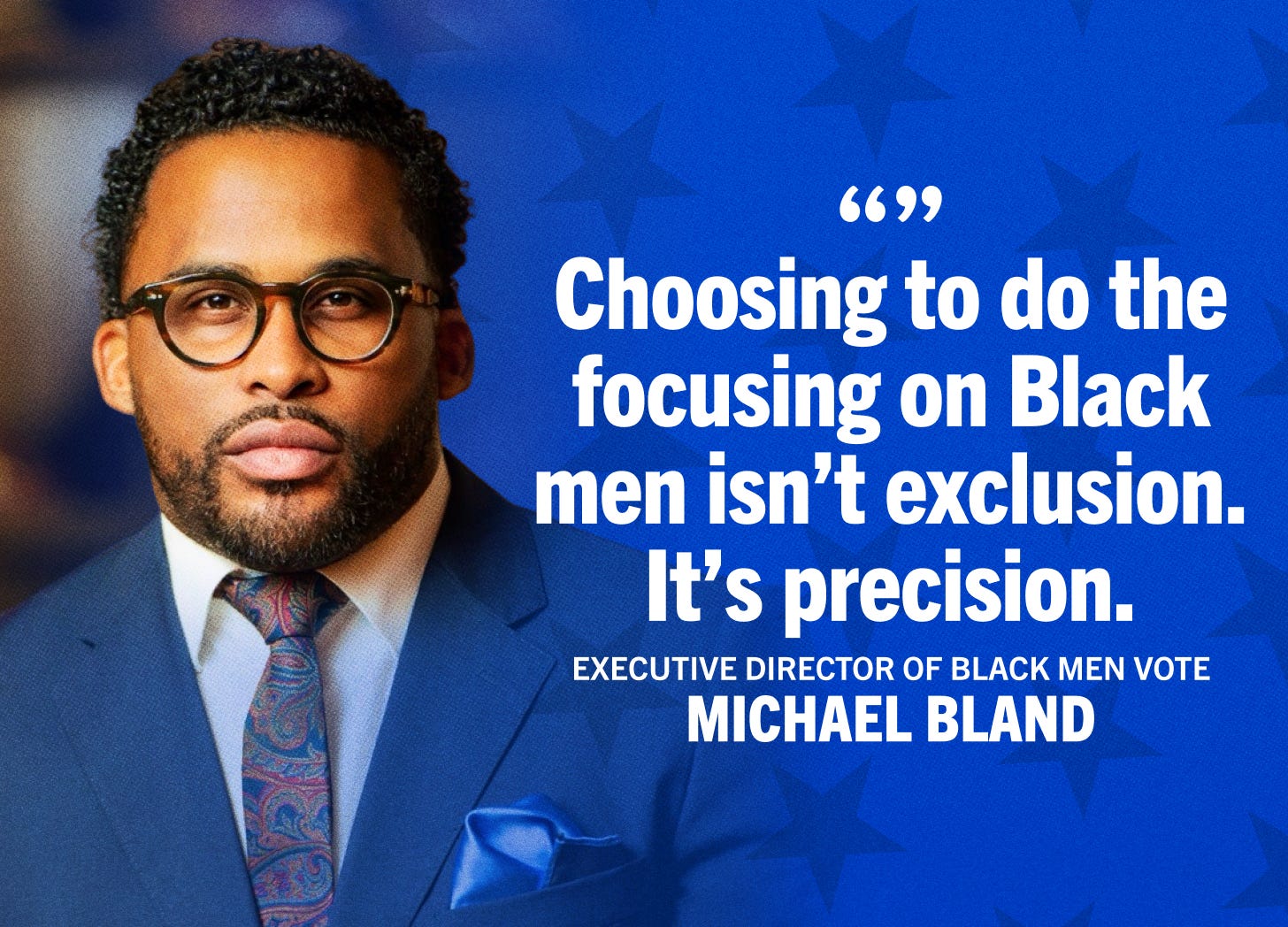
With Election Day right around the corner, voting is already underway nationwide. Whether casting ballots by mail or in-person during early voting, millions of Americans are already making their voices heard. Michael Bland, Executive Director of Black Men Vote, knows how critical this participation is, especially for Black men. With a distinguished career in political strategy and civic engagement, including serving as Southern Battleground Director and Senior Advisor for Faith Engagement for the Harris-Walz campaign, Michael brings invaluable insight to this work. Under his leadership, Black Men Vote continues to lead transformative initiatives that educate, mobilize, and empower Black men, expand voter access, and drive lasting change in communities nationwide — a mission highlighted this Saturday with National Black Man Voter Day.
Below is our interview with Michael Bland.
Q: What is National Black Man Voter Day, and what inspired it?
National Black Man Voter Day is a coordinated national push to mobilize 100,000 new Black men to vote, anchored on October 24. Four organizations initially came together: the NAACP, 100 Black Men of America, the National Urban League, and Black Men Vote. What inspired it was simple. For years, Black men have been talked about every election cycle: under-analyzed, under-polled, and rarely debated. But they’re rarely talked to by the people and institutions they actually trust. We wanted to change that. Every one of these organizations already has deep relationships with Black men in barbershops, churches, fraternities, mentoring programs, and workplaces. This day connects those networks so they move together.
Q: Why the intentional focus on Black male voters?
When you don’t speak to someone directly, you shouldn’t be surprised when they don’t show up. Black men are not a monolith, and they’re not a problem to be solved. They’re a constituency that has been under-engaged, under-resourced, and often taken for granted. The gap between Black men who say they plan to vote and those who actually cast a ballot is real. In close states, that gap could decide elections for governor, Senate, school board, and district attorney. If we close it, Black men will have a stronger hand in the policies that shape their lives. Focusing on Black men isn’t exclusion. It’s precision.
Q: What key issues are driving Black men to engage today?
Economics comes first: careers, not jobs; wages; the cost of living; and whether you can build something to pass down. Black men want a fair shot at owning a business, buying a home, and keeping their families stable. Public safety and criminal justice come right behind, and they cut both ways. Higher education and the pathways it creates is another real resource that Black men see as critical. Then there’s the future: what our sons and daughters will inherit. Lastly is mental health, when Black men have a soaring rate of suicide that has skyrocketed in recent years. Altogether, Black men just want safe neighborhoods and fair treatment. What I hear most isn’t apathy. It’s “show me how this vote changes my block.”
Q: How does the initiative address fatigue, skepticism, and disengagement?
We don’t fight skepticism by pretending it isn’t earned. Many Black men have voted and watched promises go nowhere, so we start by respecting that. Then we meet them where they are, through messengers they already trust, not a stranger with a clipboard. We’re holding mass calls where Black men can dig into how voting actually works in their state. We’re running a storytelling campaign, #ThisBlackManVotes, so men hear from peers instead of politicians. And we focus on local races, where one vote visibly moves things. I always come back to something my mother taught me: Nobody’s going to save us. We have to show up for ourselves. That’s not cynicism. It’s ownership.
Q: What practical actions can individuals and leaders take?
For individuals: Check your registration today, plan when and where you’ll vote, and bring three men with you, whether that’s your brother, your barber, or your homeboy from the job. One man asking another is still our most powerful organizing tool. For community leaders, pastors, coaches, business owners, and fraternity brothers: Use your platform.
Host a voting conversation, share state deadlines, and post your #ThisBlackManVotes story. Then don’t stop on Election Day. The goal is to build infrastructure so Black men stay engaged in every cycle, not just the big ones.
Support Our Battleground States
As Michael Bland highlighted, real change happens when we show up and mobilize our communities. The future of our nation will be decided in key battleground states where every single vote counts. Get involved today to help turn out voters and build lasting civic power!
Join Our Voter Protection Efforts
Protecting the right to vote is central to expanding voter access for Black men and underrepresented communities across the nation. Join our voter protection team, from answering hotline calls to supporting voters at the polls, to ensure every eligible voter can cast their ballot and make their voice heard.
Don’t stop there! Make sure to check your voter registration on IWillVote.com and prepare your voting plan. You can also download our Know Your Rights at the Polls guide to help educate and empower voters in your community.
Share Your Story
Peer-to-peer engagement and authentic storytelling are at the heart of empowering our communities. Share your voting story today to inspire others to make a plan and take ownership at the ballot box!
Share, Subscribe, and Support The Blue Print
Thank you so much for reading The Blue Print! If you enjoyed this week’s newsletter, let us know with a like, restack, and make sure to share it with your friends so we can keep bringing you weekly updates from the DNC’s Grassroots Team!
**DISCLAIMER: This article may contain outdated information or links to opportunities and other events that may have already passed. Please continue to stay updated with The Blue Print’s most recent posts for the most up-to-date information.**